Two New Titles in the OUP Studies in Digital Politics Book Series

image

image

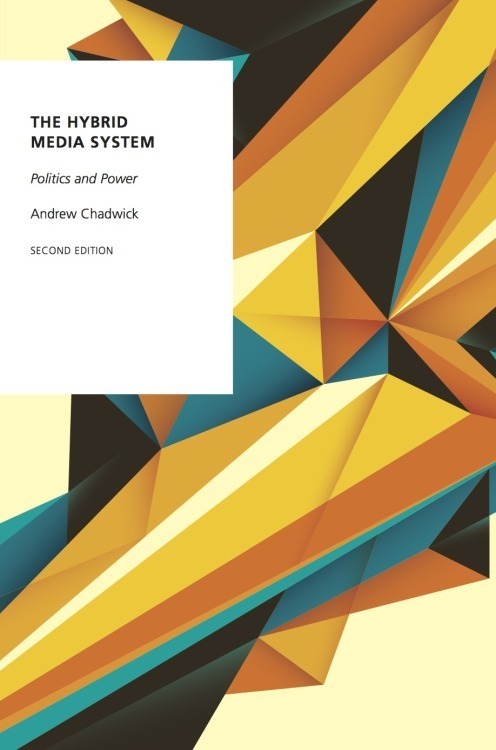
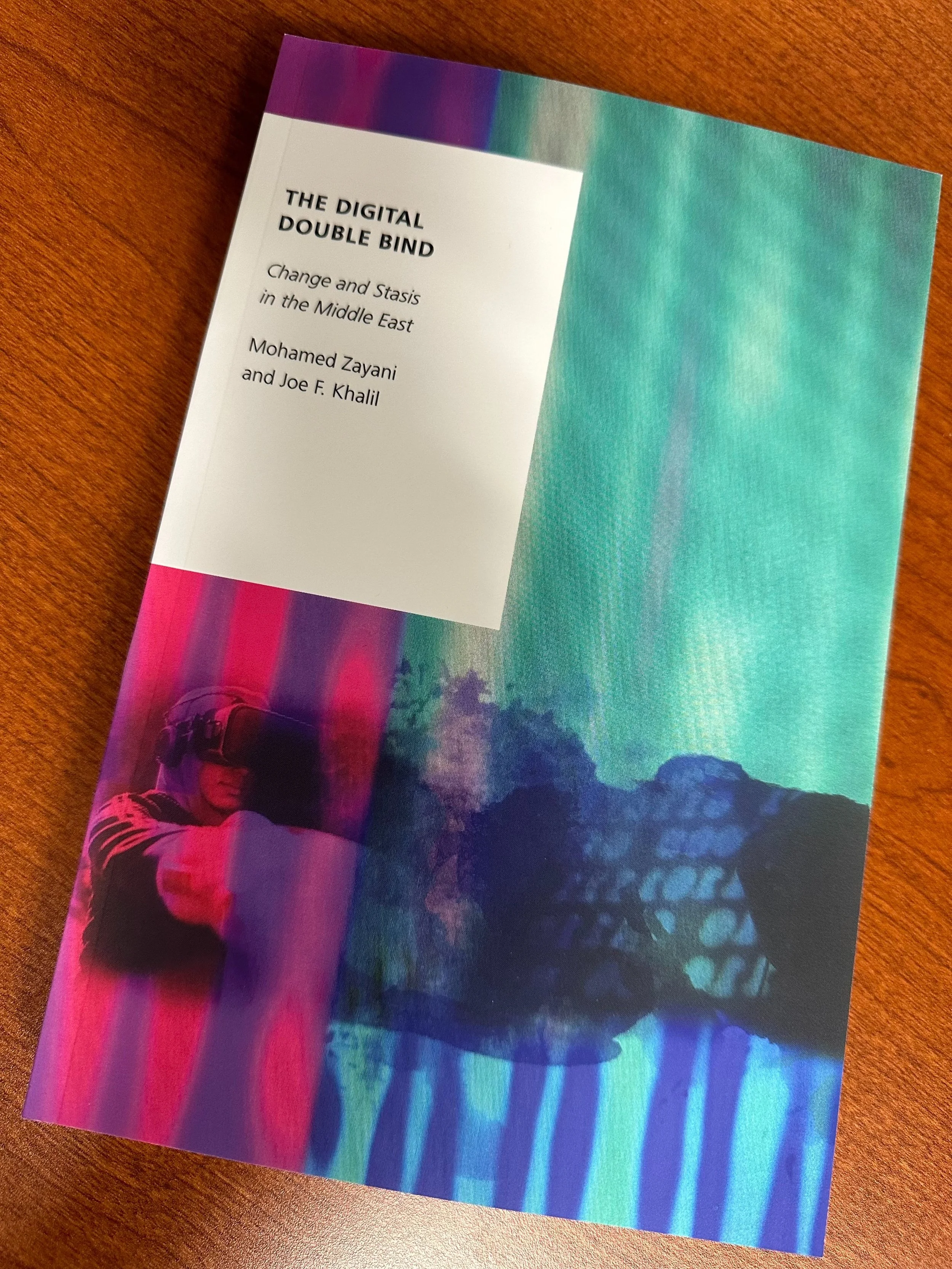
Two new titles in the OUP Studies in Digital Politics book series, for which I’m series editor, have recently been published: Sarah Oates’ Revolution Stalled: The Political Limits of the Internet in the Post-Soviet Sphere and Phil Howard and Muzammil Hussain’s Democracy’s Fourth Wave: Digital Media and the Arab Spring.


Here’s an up to date list of where things currently stand with the series:

Published

Philip N. Howard (2010) The Digital Origins of Dictatorship and Democracy:  Information Technology and Political Islam. (Winner, Best Book Award, 2011, American Political Science Association Information Technology and Politics Section).

David Tewskbury and Jason Rittenberg (2012) News on the Internet: Information and Citizenship in the 21st Century.

David Karpf (2012) The MoveOn Effect: The Unexpected Transformation of American Political Advocacy.

Daniel Kreiss (2012) Taking Our Country Back: Political Consultants and the Crafting of Networked Politics from Howard Dean to Barack Obama

Karen Mossberger, Caroline J. Tolbert, and William W. Franko (2012), Digital Cities: The Internet and the Geography of Opportunity

Sarah Oates (2013) The Internet, Repression, and Revolution: Information and Control in the Post-Soviet Sphere

Philip N. Howard and Muzammil M. Hussain (2013) Democracy’s Fourth Wave? Digital Media and the Arab Spring.

Forthcoming

Andrew Chadwick (2013, July) The Hybrid Media System: Politics and Power.

Jason Gainous and Kevin Wagner (2013, November/December) Tweeting to Power: The Social Media Revolution in American Politics.

Steven Livingston and Gregor Walter-Drop (eds) (2013) Bits and Atoms: Information and Communication Technology in Areas of Limited Statehood.

Jennifer Stromer-Galley Presidential Campaigns in the Internet Age.

Rachel Gibson The Rise of Citizen Campaigning: How the Web is Reshaping Parties, Elections, and Participation in Global Perspective.

Jessica L. Beyer Expect Us: Online Communities and Political Mobilization.


If you’re writing, or are thinking of writing, a book that would be a good fit with the series, I’d be interested in hearing about it. Drop me a line.

As ever, happy reading!

Giving the 2013 Attallah Lecture at Carleton University, March 7, 2013

I will be giving the 2013 Attallah Lecture at Carleton University on March 7, 2013. The Lecture takes place annually in honour of Paul Attallah and is part of Carleton’s Communication Graduate Caucus Annual Conference, whose theme this year is [Re]visions: Protest and Resistance.

Many thanks to Carleton’s CGC and to the Faculty of the School of Journalism and Communication for inviting me. It is a real honour and I very much look forward to participating in the conference.

Attallah Lecture specifics:

Date: Thursday, March 7, 2013.
Time: 6:30 PM.
Location: National Arts Centre, Ottawa, 53 Elgin Street, at Confederation Square, Ottawa, Ontario, K1P 5W1, Canada.
Free and open to the public.

Map.

Update March 11, 2013: Some reactions…

Speaking at an event on the European Citizens’ Initiative in Westminster, November 29, 2012

A quick note to say that I’ll be speaking at an event about the European Citizens’ Initiative in central London this coming Thursday, November 29. 

Organized by the European Parliament Information Office, held at Europe House, Smith Square, Westminster, and entitled Can Digital Democracy Work? the meeting will consist of MEPs and representatives from the Officer of the Leader of the House of Commons, 38 Degrees, and transnational civil society movement, European Alternatives.

More details at the European Parliament Information Office site and links to a series of articles to accompany the event (including one by me), published by The Independent.

If you would like to attend the discussion, please RSVP to Agnieszka.PIELA@ext.ec.europa.eu

Links:
European Citizens’ Initiative.
Article for The Independent.
38 Degrees.
European Alternatives.
Timothy Kirkhope MEP.

Oxford Studies in Digital Politics Book Series: New Title Now Out: Digital Cities

A new title in the Oxford University Press book series I edit, Oxford Studies in Digital Politics, has just been published: Digital Cities: The Internet and the Geography of Opportunity, by Karen Mossberger, Caroline J. Tolbert, and William W. Franko.

Click here for more detail on the book.

Click here for more detail on the book series and forthcoming titles.

Amazon U.S. (in stock now).

Amazon U.K. (stock arriving late December).

Happy reading!

By the way, if you work in one of the following broad areas and are currently writing a book (not an edited volume), I would be interested in hearing from you:

Digital politics in China.
Digital politics and international relations.

New Article: “Recent Shifts in the Relationship Between the Internet and Democratic Engagement in Britain and the United States: Granularity, Informational Exuberance, and Political Learning”

I have a new article out in an excellent edited collection that has been put together by Eva Anduiza, Mike Jensen, and Laia Jorba, and published in Lance Bennett and Robert Entman’s book series with Cambridge University Press.

Mike Jensen has written a useful blog post describing the book here.

The volume has its origins in a superb workshop held in Barcelona.

The title of my chapter is: “Recent Shifts in the Relationship Between the Internet and Democratic Engagement in Britain and the United States: Granularity, Informational Exuberance, and Political Learning.” I hope you find it interesting.

Here are some Amazon links:

Amazon US link.

Amazon UK link.

There’s also a Kindle and a Nook edition.

New OUP Digital Politics Title: “Taking Our Country Back” by Daniel Kreiss

31g3eogVJrL._SS500_.jpg

A further new title in the Oxford University Press book series I edit, Oxford Studies in Digital Politics, has just been published: Taking Our Country Back: The Crafting of Networked Politics from Howard Dean to Barack Obama, by Daniel Kreiss.

Click here for more detail on the book.

Click here for more detail on the book series and forthcoming titles.

And again: happy reading!

Amazon U.S. (in stock now)

Amazon U.K. (stock arriving later in the summer)

Speaking at the Holberg Prize Symposium Next Week, June 5

holberg.png

I’ll be speaking at this year’s Holberg International Memorial Prize Symposium in Bergen, Norway, on June 5.

This year, the prize of NOK 4.5 million (or EUR 570,000/USD 800,000) has been awarded to Manuel Castells for his outstanding work as the leading sociologist of the city and new information and media technologies. The prize is awarded annually for outstanding scholarly work in the fields of the arts and humanities, social sciences, law, and theology. Congratulations to Manuel!

For more information about the 2012 Holberg International Memorial Prize, click here.

For more information about the 2012 Holberg International Memorial Prize Symposium programme, click here.

The Symposium is open to the public and there is a full programme of events over three days, some of which are organised as part of the Bergen International Festival. Several of the events are open to the public. Check the Holberg Prize website for details.

Update June 26, 2012: there is a Holberg Prize Flickr stream here.

The latest title in the Oxford University Press book series I edit, Oxford Studies in Digital Politics, has just been published: The MoveOn Effect: The Unexpected Transformation of American Political Advocacy, by David Karpf.
Click here for more detail on the book.
Click here for more detail on the book series and forthcoming titles.
Happy reading!
Amazon U.S.Amazon U.K.

On Instagram and Temporal Authenticity

Last night, Tom Standage tweeted a link to an interesting piece about the merits or otherwise of the popular photo editing and sharing service, Instagram. I retweeted Tom’s link and followed this up with the point that the main problem with Instagram is that these retro effects look great now, but will you really want to look at these photos in five or ten years time? My remark received a few retweets and today I received a couple of interesting emails today about this, so I thought I’d briefly explain what I meant.

It’s not the effects-as-cheating line that bothers me; photography has never been an authentic representation of the real. But there are other aspects to authenticity and this is where Instagram falls down. What bothers me most is the loss of the temporal markers that give a photo its unique value. These come from the camera, the lens, the film (in the analog world), and the natural light, and so on, at the time the photo was shot. What Instagram does, with its retro effects, is reproduce these old “classic” artifacts, but inauthentically.

What we really want with a photo, when we look back in ten years or so, is an authentic sense of the time and place in which it was shot. You could argue that digital photography has reduced the differences between photographs shot on the different digital cameras, but those differences are still there, and they’re often quite stark—just compare digital snaps from ten years ago with the ones you’re taking now, or look at the grainy night time shots you took on your phone’s camera during a night out with friends, and you’ll see what I mean. You can place photos in time using these markers. This is what makes old photos—analog and now digital—uniquely appealing.

Instagram messes with this appeal, in the interests of a superficially attractive, ironic nod toward the messy artifacts of analogue photography. That’s what’s wrong with it, in my view.

The latest title in the book series I edit, Oxford Studies in Digital Politics, has just been published: News on the Internet: Information and Citizenship in the 21st Century, by David Tewksbury and Jason Rittenberg.
Click here for more detail on the book.
Click here for more detail on the book series and forthcoming titles.
The book is available now in the United States; it will be available in Britain in a few weeks. Happy reading!

The latest title in the book series I edit, Oxford Studies in Digital Politics, has just been published: News on the Internet: Information and Citizenship in the 21st Century, by David Tewksbury and Jason Rittenberg.

Click here for more detail on the book.

Click here for more detail on the book series and forthcoming titles.

The book is available now in the United States; it will be available in Britain in a few weeks. Happy reading!

My Newly-Published Article in “Connecting Democracy”

Cover

My 2009 journal article, “Web 2.0: New Challenges for the Study of E-Democracy in an Era of Informational Exuberance,” which originally appeared in I/S: A Journal of Law and Policy for the Information Society 5 (1), pp. 9-41, has now been reprinted in Stephen Coleman’s and Peter Shane’s excellent new edited volume, Connecting Democracy: Online Consultation and the Flow of Political Communication (MIT Press). My chapter has been revised very slightly, but it is essentially the same as the 2009 version.

Connecting Democracy is the culmination of a three-year project in which I participated: the International Working Group on Online Consultation and Public Policymaking. This was funded by the U.S. National Science Foundation and it was steered superbly by Peter and Stephen through our several meetings—in March 2007 at Harvard University’s Kennedy School, in November 2007 at the University of Leeds, in March 2008 at The Ohio State University, in November 2008 at the Aspen Institute in Washington, D.C., and in April 2009 at Sciences Po in Paris, France.

Links:

MIT site, with more information and sample chapters.

U.S. Amazon.

U.K. Amazon.

The full citation for the reprinted article is: Andrew Chadwick (2012) “Web 2.0: New Challenges for the Study of E-Democracy in an Era of Informational Exuberance” in Coleman, S. and Shane, P (eds) Connecting Democracy: Online Consultation and the Flow of Political Communication (MIT Press, Cambridge, MA), pp. 45–75.

I can’t make it up to Manchester for this conference due to a clash with teaching, but Rob Procter and Rachel Gibson are presenting some preliminary findings from a pilot study of mining public opinion on Twitter, on which I’ve collaborated: “An Experiment in Opinion Mining Tweets” by Rob Procter, Manchester eResearch Centre, University of Manchester; Rachel Gibson, Institute for Social Change, University of Manchester; Andrew Chadwick, Royal Holloway, University of London; Sophia Ananiadou, National Centre for Text Mining, University of Manchester; and Andrew Hudson-Smith, Centre for Advanced Spatial Analysis, UCL.

November 2: Speaking at Hansard Society/University of Manchester Debate on Social Media and Campaigning

Building an Effective Social Media Campaign: A Roundtable Debate

2.00–6.00 pm, 2 November, The Attlee Suite, Portcullis House, Westminster

Organised by the University of Manchester and the Hansard Society

This roundtable, organised as part of the ESRC Festival of Social Science and taking place during Parliament Week (Oct 31 – Nov 6) brings together academics, politicians, activists, news producers and journalists to debate how social media are being used to promote protest and political change.

The discussion will look at the use of Twitter & Facebook and examine the development of social media based protest and how digital strategies for action are rapidly coalescing and becoming essential to any modern-day campaign. Finally, it will examine the role of ‘old’ media in facilitating and promoting the success of new media campaigns and ask if digital activism and online exposure are sufficient to drive the momentum offline or if it requires mainstream media coverage.

Agenda

2.00 – 2.30: Welcome, Registration and Refreshments

2.30 – 4.00: Roundtable discussion: The view from the ‘inside’ – Practitioners. Chair: Dr Andy Williamson.

- Mark Pack, Blogger (LibDemVoice)
- Dr Julian Huppert MP
- Baroness Deech
- Elizabeth Linder, Politics & Government Specialist (Facebook)

4.00 – 4.15: Refreshments

4.15 – 6.00: Roundtable discussion: The view from ‘outside’ – Media & Academic analysis.
Chair: Prof Rachel Gibson (University of Manchester).

- Matthew Eltringham (BBC UGC Hub)
- Alberto Nardelli (Tweetminster)
- Professor Andrew Chadwick (University of London, Royal Holloway)

For more information and to register for this event, please click here.

“The Hybrid Media System”—My Paper for the ECPR Next Week

Update: You can now download my paper here.

Here’s the abstract. And here’s the panel I’m on, ably assembled by Bruce Bimber and Lance Bennett.

I’ll also be a discussant on a further panel in the Internet and Politics section.

This paper combines theory and empirical analysis to explore recent systemic change in the nature of political communication. Drawing on evidence from Britain and the United States on the changing relationships among politicians, media, and publics, I argue for the concept of the hybrid media system. This system is built upon interactions among old and new media and their associated technologies, genres, norms, behaviors, and organizations. Actors in the hybrid media system are articulated by complex and evolving power relations based upon adaptation and interdependence. We now require a holistic approach to the role of information and communication in politics—one that does not exclusively focus on new or old media, but instead empirically maps where the distinctions between new and old matter, and where they do not. The focus of my attention in this article is news. First, I outline an ontology of hybridity. Next, I discuss assemblages of hybridized news making. Then I examine the phenomenon of WikiLeaks as an example of power and interdependence in the construction of news.

Download the paper here.

New Article by Yours Truly: “The Changing News Media Environment”

51tMEVtET5L._SS500_.jpg

James Stanyer and I have just had a new article published. It’s in the latest volume of the bestselling book about British politics, Developments in British Politics 9, edited by Richard Heffernan, Philip Cowley, and Colin Hay, and published by Palgrave Macmillan.

The chapter covers new media usage patterns, the changing face of news consumption, the growing pressure on newspapers, Gordon Brown’s relationship with the press, the changing nature of media management inside Number 10, and the experience of Britain’s first live televised prime ministerial debates during the election of 2010.

To give you a flavour of what’s in it, here’s an excerpt, from the conclusion.

As this chapter has shown, the political communication environment in Britain is in transition. While broadcasting still remains at the heart of national political life, the nature of mediated politics is evolving rapidly and in directions that are sometimes contradictory, sometimes complementary. The election leaders’ debates reinforced television’s predominance, though as we saw above, even those events were accompanied by a panoply of online activism, some of it facilitated by the broadcasters themselves.

The way citizens consume political information is changing in the new digital environment. As use of the internet and mobile technologies has grown, so they have become an important port of call for those seeking political news. Audiences have never had access to so much political information through such a variety of news outlets. At the same time, these technologies provide new opportunities for audiences to engage in political activities, express their opinions and contribute content in historically unprecedented ways. The evidence suggests that growth in the numbers taking advantage of these interactive opportunities is likely to continue.

There are, however, cautionary themes. Concerns about the stratified nature of the digitised public sphere remain. Those that take advantage of new technologies to participate in politics remain a minority and still tend to be wealthy, well educated and younger. Second, this new communicative digital space has also impacted upon politicians and media organisations, creating opportunities, but at the same time new uncertainties. Established news outlets remain a visible presence but face financial pressures. While news organisations have responded innovatively, competition, shrinking audiences, and lower revenues – especially from advertising – have negatively affected their resource bases. There have often been no alternatives to cost cutting. The public service provider, the BBC, has fared well up to now, but it too is likely to face future financial constraints, and this may well have implications for the quality of news citizens receive.

Politicians and their strategists have been forced to adapt to a rapidly pluralising digital sphere. Party leaders have promoted themselves using a range of interactive features to try and connect with citizens, albeit with varying degrees of success. While the internet has opened up new ways for politicians to interact with the public, it has also posed a series of challenges. Some aspects of the online information environment have proved difficult to control. The fast-moving news cycles require constant monitoring and are significantly more difficult to direct. The public spread of gossip and rumour is perhaps more common place. While political elites have been keen to be seen embracing new media, they are understandably less keen to be seen reverting to necessary but dubious methods of control. The leaked emails that led to “Smeargate” reveal, not only that some old command and control techniques of the broadcast era are still hugely important, but also that the new media environment is inherently porous. Understanding the complex new political communication environment in the twenty-first century remains a challenge, but one to which students of politics must rise if they are to fully comprehend the nature of British democracy.


The book as a whole is excellent and as usual it is a must-read for anyone interested in British politics. You can buy a copy now from Amazon here.

It will publish in the U.S. in August and will be available here.

The full reference for our piece is: Chadwick, A. and Stanyer, J. (2011) “The Changing News Media Environment” in Heffernan, R., Cowley, P. and Hay, C. (eds) Developments in British Politics 9 (Palgrave-Macmillan), pp. 215-237.

If you would like a copy of this article, please email me (firstname.lastname@rhul.ac.uk)