New piece out now: What is Gone and What Remains in the Research on Digital Engagement?
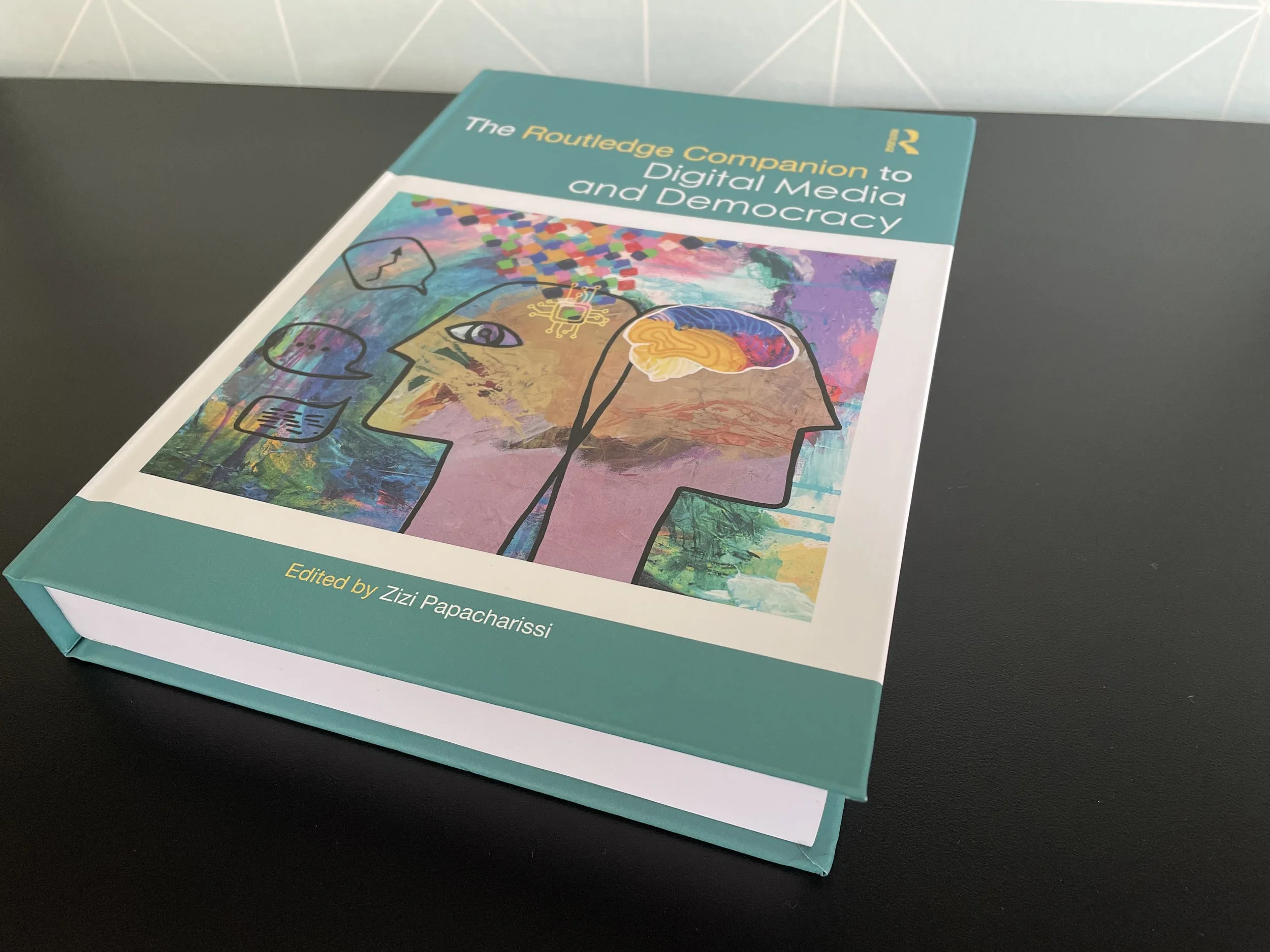
/Commissioned by Zizi Papacharissi for her new edited volume, the Routledge Companion to Digital Media and Democracy, this is a future-oriented theory and overview piece that takes stock of the development of the research in this important sub-field over the last 25 years or so.
Here’s the abstract:
Research on engagement has always been central to the social science of digital media. Not only has it generated significant theoretical innovations, it has impacted democratic practice across the world. But after the upheaval caused by the global turn toward examining social media’s dysfunctional impacts, where stands the field? Discussing recent work while contextualizing it within the field’s key assumptions of the past 30 years, I consider what is gone and what remains in the research on digital engagement. I begin by developing a simple interpretive framework that marries the three main components of a field that are prone to extinction with a three-part temporal perspective on why fields wither or evolve. Putting this framework to use, I present five arguments, as follows: the assumed context of general, neutral social media platforms is going; the assumption that online self-expression is a largely unquestionable social good is gone; previously underdeveloped models of online influence are receding, though key challenges remain; digital networks remain crucial for collective action, even as the field has shed its rosier assumptions; work that interrogates the complex entanglement of digital technologies, everyday life, and socio-political identities is undergoing a much-needed revival.
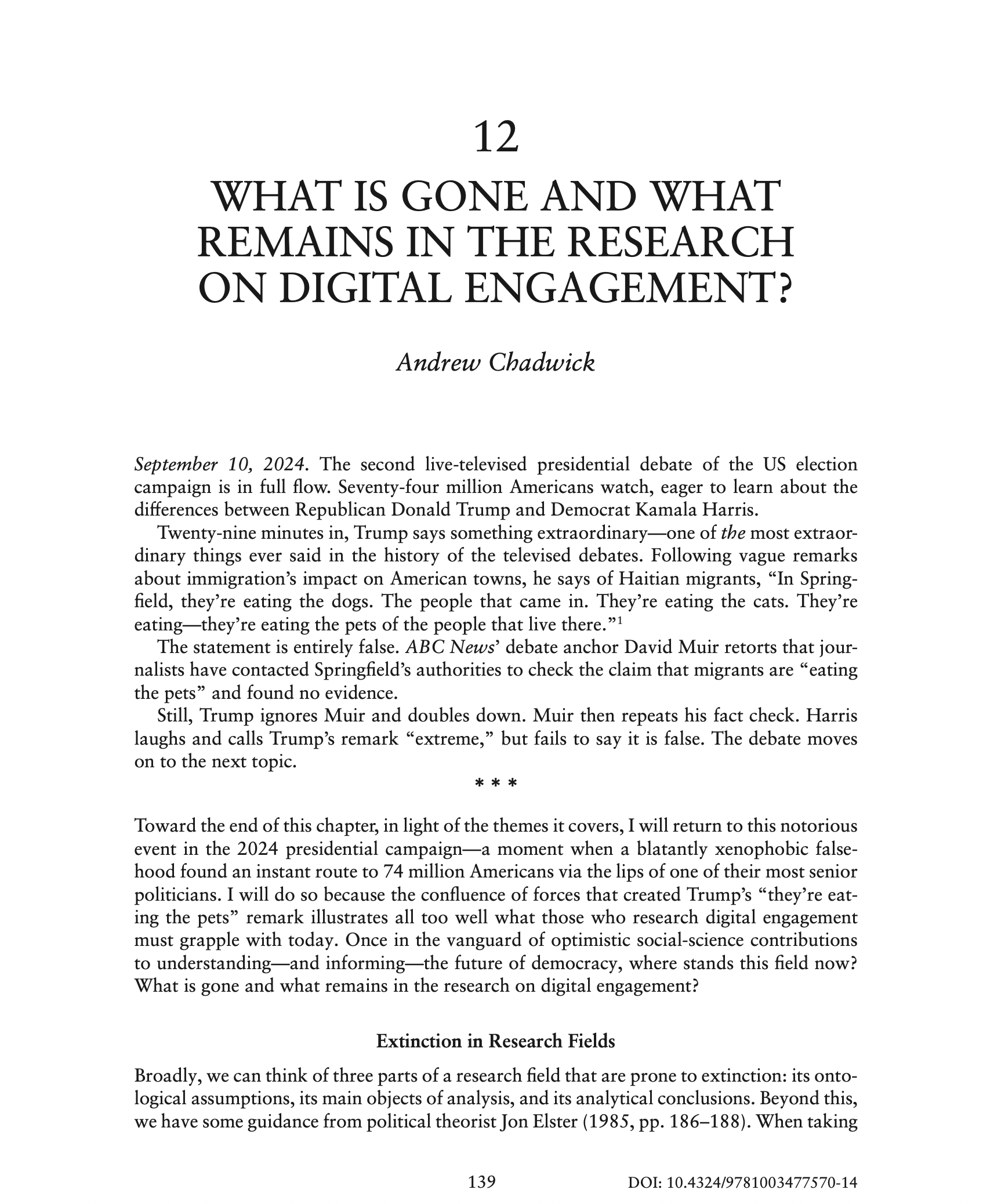
I made the final mix very soon after the 2024 U.S. presidential election result. Academic publishing schedules being what they are, the volume in which this appears published today. (On the upside, Routledge has bestowed the e-book version with a reasonable cover price—attention course lecturers and their librarians.) I gave a slightly extended version of the argument to the recent American Political Science Association (APSA) annual meeting in Vancouver.
In some respects, I see the article as part of a trilogy (of sorts) that began with this piece, which, in turn, nourished this published interview.
Enjoy…
Links
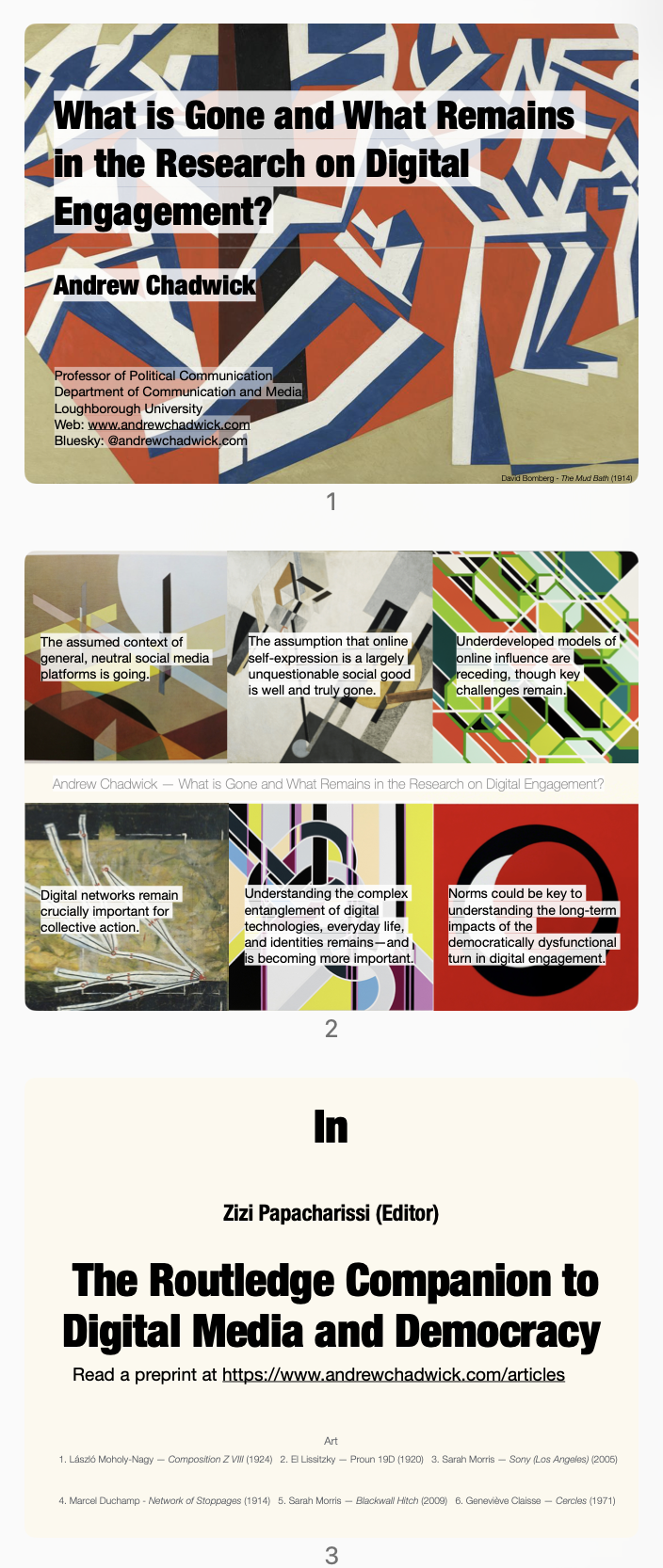
APSA slides below. I restricted myself to just three. (Click image to download as PDF)